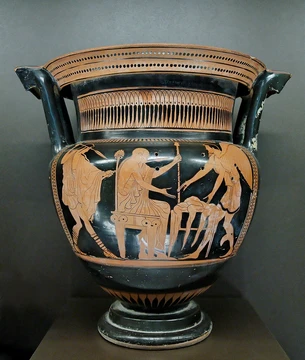
Amphion and Zethus
Twin sons of Zeus who built the walls of Thebes.

Amphion and Zethus were twin brothers in Greek mythology, born to Antiope and fathered by either Zeus or a man named Theobus. They play a key role in one of Thebes’ two foundation stories, as they built the city’s walls.
After their mother was raped by Zeus, she fled in shame to Sicyon and married King Epopeus. Either Nycteus or Lycus attacked Sicyon to bring her back to Thebes for punishment. On the journey, she gave birth to the twins and was forced to abandon them on Mount Cithaeron. Lycus then handed Antiope over to his wife, Dirce, who treated her cruelly for years.
Antiope eventually escaped and found her sons living near Mount Cithaeron. Once convinced she was their mother, they killed Dirce by tying her to a bull’s horns, raised an army, conquered Thebes, and became its joint rulers. They either killed Lycus or forced him to give up his throne.
Amphion became a great musician after the god Hermes gave him a golden lyre and taught him to play. Zethus became a hunter and herdsman, focused on cattle breeding. Zethus’s attribute was a hunting dog; Amphion’s was the lyre. At Apollo’s command, they built the fortifications around Thebes’ citadel, the Cadmea. While Zethus struggled to carry stones, Amphion played his lyre, and the stones moved into place on their own.
Amphion married Niobe, daughter of King Tantalus of Lydia, and learned to play in the Lydian mode, adding three strings to his lyre. Zethus married Thebe, after whom the city was named—or the kingdom was named for their supposed father, Theobus.
Niobe, proud of her many children, insulted the goddess Leto, who had only two children, Artemis and Apollo. In revenge, Apollo and Artemis killed all of Niobe’s children. Amphion either killed himself in grief, was murdered by the gods alongside his children, or—according to Hyginus—attacked Apollo’s temple in madness and was shot dead by the god’s arrows.
Zethus had only one son, who died due to a mistake by his mother Thebe, leading Zethus to kill himself. In the *Odyssey*, Zethus’s wife is Aëdon, who killed her son Itylus in a fit of madness and became a nightingale. Later versions say Aëdon, jealous of Niobe’s many children, tried to kill Niobe’s firstborn but mistakenly killed her own son. When Zethus chased her in rage, Zeus turned her into a nightingale. Another version claims Aëdon suspected her husband (sometimes called Zetes) of infi
- born
- Mount Cithaeron (exposed as infants)
- died
- Amphion: suicide or killed by Apollo; Zethus: suicide
- field
- Greek mythology
- nationality
- Theban
- known_for
- Building the walls of Thebes; Amphion's lyre music moving stones; Zethus as hunter and herdsman
Lore & Background
Amphion and Zethus were the sons of Antiope, who fled in shame to Sicyon after Zeus raped her, and married King Epopeus there. However, either Nycteus or Lycus attacked Sicyon in order to carry her back to Thebes and punish her. On the way back, she gave birth to the twins and was forced to expose them on Mount Cithaeron. Lycus gave her to his wife, Dirce, who treated her very cruelly for many years. Antiope eventually escaped and found her sons living near Mount Cithaeron. After they were convinced that she was their mother, they killed Dirce by tying her to the horns of a bull, gathered an army, and conquered Thebes, becoming its joint rulers. They also either killed Lycus or forced him to give up his throne.
Amphion became a great singer and musician after his lover Hermes taught him to play and gave him a golden lyre. Zethus became a hunter and herdsman, with a great interest in cattle breeding. As Zethus was associated with agriculture and the hunt, his attribute was the hunting dog, while Amphion's - the lyre. Amphion and Zethus built the fortifications of Thebes. They built the walls around the Cadmea, the citadel of Thebes, at the command of Apollo. While Zethus struggled to carry his stones, Amphion played his lyre and his stones followed after him and gently glided into place.
Amphion married Niobe, the daughter of Tantalus, the Lydian king. Because of this, he learned to play his lyre in the Lydian mode and added three strings to it. Zethus married Thebe, after whom the city of Thebes was named. Otherwise, the kingdom was named in honour of their supposed father Theobus. Later misfortunes struck both brothers: Amphion's wife Niobe's children were killed by Apollo and Artemis; Amphion either committed suicide or was killed by Apollo. Zethus's only son died through a mistake of his mother Thebe, causing Zethus to kill himself. After their deaths, Laius returned to Thebes and became king.
Reader's Guide
Amphion and Zethus are central figures in the founding mythology of Thebes, representing a duality of culture and nature. Amphion, the musician, embodies the civilizing power of art, while Zethus, the hunter and herdsman, represents the practical, agricultural foundation of society. Their joint construction of Thebes' walls—with Amphion's lyre moving stones into place—symbolizes the harmony of these forces. The brothers' story also includes themes of vengeance, family tragedy, and the consequences of hubris, as seen in the deaths of Niobe's children and the suicides of both brothers. Their myth shares structural similarities with other divine twin pairs, such as Castor and Polydeuces, and with the Roman founders Romulus and Remus. The legacy of Amphion and Zethus endures as a foundational narrative for Thebes, explaining the city's walls and its name (through Zethus's wife Thebe). Their tale also appears in ancient sources such as Plato's Gorgias and Homer's Odyssey, and it has been preserved in the works of Apollodorus, Pausanias, and others.
Did You Know?
- Amphion and Zethus were the twin sons of Zeus (or Theobus) by Antiope.
- They built the walls of Thebes; Amphion's lyre music caused stones to glide into place.
- Zethus married Thebe, after whom the city of Thebes was named.
- Amphion's wife Niobe had many children, but they were killed by Apollo and Artemis after she insulted Leto.
The Singing Stones: Building Thebes
The most celebrated episode in the brothers' story is their construction of Thebes' fortifications. Acting on Apollo's direct command, Amphion and Zethus raised the walls that enclosed the Cadmea, the city's ancient citadel. The two approaches to the task could not have been more different. Zethus, a man of the fields and the hunt whose symbolic attribute was a hunting dog, labored physically to haul each massive stone into position. Amphion, whose attribute was the lyre, took an entirely different path. After Hermes had gifted him a golden lyre and taught him to play, Amphion simply performed, and the stones responded to his music, gliding gently into their proper places without any brute force. This contrast between physical labor and artistic power defines the brothers' complementary natures. Together, their work made them central figures in one of Thebes' two founding narratives, establishing them as the city's legendary architects and joint rulers. Their partnership embodied a principle that art and strength, when combined, could accomplish what neither could alone.
Exile, Exposure, and Vengeance
The twins' origins are steeped in violence and displacement. Their mother Antiope, after being violated by Zeus, fled in humiliation to Sicyon, where she wed King Epopeus. That refuge proved temporary: either Nycteus or Lycus launched an assault on Sicyon to drag her back to Thebes for punishment. En route, Antiope gave birth to the boys and was compelled to leave them exposed on the slopes of Mount Cithaeron. Back in Thebes, Lycus handed her over to his wife Dirce, who subjected her to years of brutal treatment. Antiope eventually broke free and tracked down her sons near the mountain. Once the boys accepted her as their mother, they acted with terrible swiftness: they bound Dirce to the horns of a bull and let the animal tear her apart. The twins then rallied an army, seized Thebes, and took the throne jointly, either slaying Lycus or compelling him to abdicate. This sequence—abandonment, maternal suffering, and the children's violent reclamation of power—forms the dramatic engine of their origin story and sets the stage for their rule.
Marriages, Hubris, and Grief
Each brother's marriage sealed a separate tragedy. Amphion wed Niobe, daughter of the Lydian king Tantalus, and through this union he adopted the Lydian musical mode, adding three strings to his lyre. Niobe bore numerous children but grew so proud that she insulted the goddess Leto, who had only two. In retaliation, Apollo and Artemis slaughtered Niobe's entire brood. The sources diverge on Amphion's end: Ovid has him take his own life in grief; Telesilla reports that the divine twins killed him alongside his children; Hyginus describes him attacking Apollo's temple in madness before the god's arrows struck him down. Zethus's fate was no less devastating. His wife—called Thebe in one tradition, Aëdon in Homer's Odyssey—lost their only son through a fatal mistake, driving Zethus to suicide. In the Odyssey version, Aëdon, consumed by jealousy over Niobe's many children, attempted to kill Amphion and Niobe's firstborn Amaleus but struck their son Itylus instead. Her father-in-law Zeus then transformed her into a nightingale as Zethus pursued her in rage.
Echoes in Myth and Memory
Long after their deaths, the twin brothers cast a wide shadow across Greek and Roman storytelling. Scholars routinely draw parallels between Amphion and Zethus and the Dioscuri, Castor and Polydeuces, as well as the Roman founders Romulus and Remus, since all three pairs embody the theme of twin brothers who establish or defend a city. Their legacy is also embedded in Thebes' physical and political landscape. The Neitian gate of the city was traditionally named for Neis, a daughter of either Zethus or Amphion, tying the twins' lineage directly to the urban fabric. The kingdom itself bore the name Thebes after Zethus's wife, while other accounts credit their supposed father Theobus as the namesake. When the brothers perished, the throne passed to Laius, who returned to rule Thebes. Plato even references them in the Gorgias, and their story appears in works by Apollodorus, Pausanias, and Homer, testifying to their enduring place in the classical literary canon.
Frequently Asked Questions
Who are Amphion and Zethus?
They are twin brothers in Greek mythology, sons of the mortal woman Antiope and the god Zeus. Left as helpless infants on Mount Cithaeron, they later grew into the legendary builders of Thebes.
What are Amphion and Zethus's powers or roles?
Amphion was a master lyre player whose music could coax stones into place, while Zethus was a skilled hunter and herdsman. Together they are credited with raising the walls of Thebes.
How did Amphion and Zethus build the walls of Thebes?
Amphion strummed his lyre, and the stones responded to the melody, lifting and settling themselves into the city's fortifications. This musical feat is one of Thebes' two competing origin stories for its walls.
How does the story of Amphion and Zethus end?
Both brothers met tragic deaths: Zethus took his own life, and Amphion either killed himself or was struck down by Apollo. Their fates brought the Theban dynasty they founded to a close.
Why are Amphion and Zethus important in Greek mythology?
They anchor Thebes' founding myth as the builders of its legendary walls, and their story is inseparable from the long suffering of their mother Antiope under Dirce. Their tale also ties Zeus's divine action directly to the very existence of the city.
More in Mythological duos 1-24
Spotted an error? Know more?
This is a living reference — every entry is fact-audited, and reader corrections feed straight into our audit queue. Suggest an edit · See this site's audit record