Cupid and Psyche
A tale of love, trials, and the soul's union with desire.

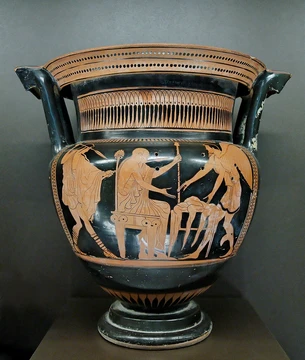
Cupid and Psyche appears in *Metamorphoses* (also known as *The Golden Ass*), a 2nd-century AD novel by Lucius Apuleius Madaurensis (also called Platonicus). The story follows the journey of Psyche (from the Ancient Greek Ψυχή, meaning “Soul” or “Breath of Life”) and Cupid (Latin *Cupido*, “Desire,” also called Amor, “Love,” or the Greek Eros, Ἔρως) as they overcome various obstacles to be together, finally uniting in a sacred marriage. While Apuleius provides the only full ancient version, Greek artwork depicts Eros and Psyche as early as the 4th century BC. The tale contains Neoplatonic themes and hints at mystery religions, allowing for multiple readings—as allegory, folktale, fairy tale (*Märchen*), or myth.
Boccaccio knew the story by around 1370, and the first printed version came out in 1469. Since then, Cupid and Psyche has enjoyed a long life in the classical tradition, retold in poetry, drama, and opera, and shown widely in painting, sculpture, and even wallpaper.
**In Apuleius**
The tale of Cupid and Psyche (or “Eros and Psyche”) sits at the midpoint of Apuleius’s novel, taking up roughly a fifth of the whole work. The novel itself is a first-person account from the protagonist Lucius, who is turned into a donkey by a botched spell, endures a series of trials, and eventually regains human form after eating roses sacred to Isis. Psyche’s story shares some of these elements, including dangerous curiosity, punishments and tests, and redemption through divine favor.
Structurally, the tale mirrors the main plot and serves as an example of *mise en abyme*. It unfolds within a complex frame: Lucius retells the story as it was originally told by an old woman to Charite, a bride kidnapped by bandits on her wedding day and held in a cave. The happy ending for Psyche is meant to calm Charite’s fear of rape, one of several ironic touches by Apuleius. Though the tale cannot be pinned down as a strict allegory of a specific Platonic argument, Apuleius drew on imagery like the winged soul’s difficult ascent (from *Phaedrus* 248) and the soul’s union with the divine through the daemon Love (from *Symposium* 212b).
**Story**
Once, a king and queen ruled an unnamed city and had three strikingly beautiful daughters. The youngest, Psyche, was the most beautiful of all. Her admirers neglected the proper worship of Aphrodite (the love goddess Venus) and instead p
- source
- Metamorphoses (The Golden Ass) by Lucius Apuleius Madaurensis
- century_written
- 2nd century AD
- field
- Classical mythology, literature
- known_for
- Allegory of the soul's union with divine love
- earliest_art_evidence
- 4th century BC (Greek art)
Lore & Background
The tale of Cupid and Psyche is placed at the midpoint of Apuleius's novel, and occupies about a fifth of its total length. The novel itself is a first-person narrative by the protagonist Lucius. Transformed into a donkey by magic gone wrong, Lucius undergoes various trials and adventures, and finally regains human form by eating roses sacred to Isis. Psyche's story has some similarities, including the theme of dangerous curiosity, punishments and tests, and redemption through divine favor. As a structural mirror of the overarching plot, the tale is an example of mise en abyme. It occurs within a complex narrative frame, with Lucius recounting the tale as it in turn was told by an old woman to Charite, a bride kidnapped by bandits on her wedding day and held captive in a cave.
Reader's Guide
The story of Cupid and Psyche has been analyzed as an allegory and in light of folktale, Märchen or fairy tale, and myth. Its Neoplatonic elements and allusions to mystery religions accommodate multiple interpretations. Although the tale resists explication as a strict allegory of a particular Platonic argument, Apuleius drew generally on imagery such as the laborious ascent of the winged soul (Phaedrus 248) and the union with the divine achieved by Soul through the agency of the daemon Love (Symposium 212b). The story was known to Boccaccio in c. 1370, and the first printed version dates to 1469. Ever since, the reception of Cupid and Psyche in the classical tradition has been extensive. The story has been retold in poetry, drama, and opera, and depicted widely in painting, sculpture, and even wallpaper.
Did You Know?
- The tale occupies about a fifth of Apuleius's novel Metamorphoses.
- Psyche's name means 'Soul' or 'Breath of Life' in Ancient Greek.
- Cupid accidentally scratches himself with his own arrow and falls in love with Psyche.
- The story was known to Boccaccio around 1370 and first printed in 1469.
Frequently Asked Questions
Who are Cupid and Psyche?
Cupid (also called Eros or Amor) is the deity of desire and romantic attraction, while Psyche represents the human soul or breath of life. Together they form one of classical mythology's most iconic romantic pairings, central to the narrative of the soul's journey toward divine union.
Where does the Cupid and Psyche story come from?
The fullest ancient telling appears in Apuleius's second-century novel Metamorphoses (commonly known as The Golden Ass), where their tale is framed as a story-within-a-story. Greek vase paintings and sculptures, however, already depicted Eros and Psyche as a pair by the fourth century BC, indicating the pairing predates Apuleius's literary version.
What are Cupid and Psyche's roles or powers?
Cupid embodies and wields the force of desire and romantic attraction, while Psyche personifies the mortal soul and its longing for transcendence. Their relationship functions as an allegory for the soul's pursuit of, and eventual union with, the divine.
How does the Cupid and Psyche story end?
After Psyche endures a series of grueling trials imposed by Venus, she is granted immortality and marries Cupid in a sacred, eternal union. Their son, Pleasure (Voluptas), is born from this divine marriage, completing the soul's ascent.
Why is the Cupid and Psyche myth important?
It stands as one of the earliest and most complete literary treatments of the soul's journey toward divine love, carrying strong Neoplatonic themes about transcendence and spiritual fulfillment. The narrative has also profoundly shaped Western art, literature, and psychology for over two millennia.
More in Mythological duos 1-24
Spotted an error? Know more?
This is a living reference — every entry is fact-audited, and reader corrections feed straight into our audit queue. Suggest an edit · See this site's audit record